Anode-Free Rechargeable Batteries
Design, Performance, and Upscaling
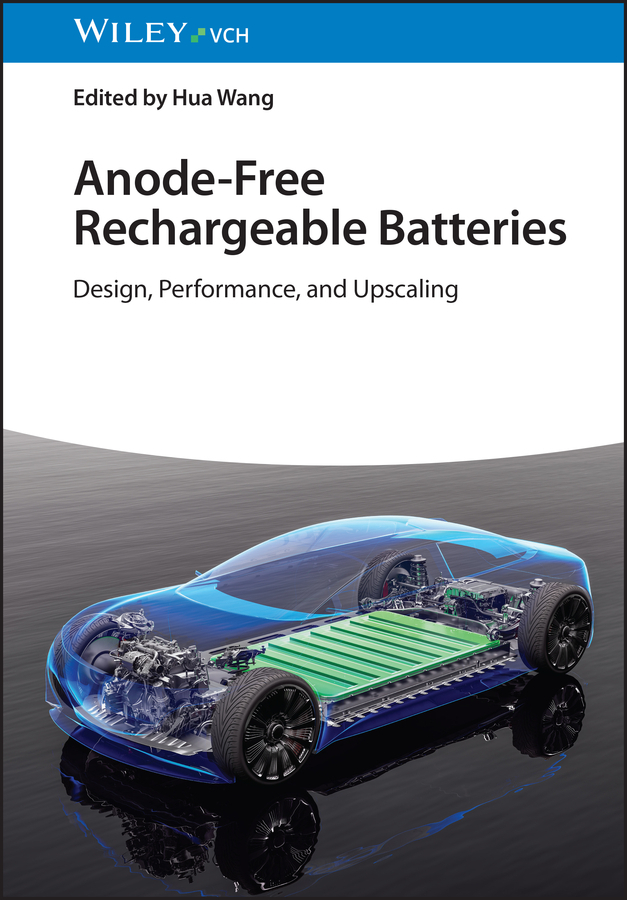
Anode-Free Rechargeable Batteries
Design, Performance, and Upscaling
Advance anode-free battery development from fundamentals to cell upscaling
Anode-free configurations of rechargeable batteries eliminate initial metal inventory at the anode side, yielding high energy density and simplified manufacturing. Anode-Free Rechargeable Batteries: Design, Performance, and Upscaling focuses on anode-free battery technology spanning lithium, sodium, zinc, and other-metal chemistries. The book integrates relevant fundamental operating principles, materials selection, interphase engineering and holistic battery design into a comprehensive reference for researchers and engineers working in energy storage.
Coverage progresses from electrochemistry fundamentals to advanced topics include electrolyte regulation, current collector modification, and failure mechanism analysis. Performance-comparison tables and illustrated examples enable direct evaluation across competing chemistries. A unified benchmarking framework establishes standardized test protocols and a practical roadmap for scaling from coin cells to pouch cells under real-world manufacturing constraints.
The book also covers:
* In-depth coverage of anode-free sodium and zinc battery systems alongside emerging post-lithium chemistries and their specific design challenges
* Interphase engineering strategies addressing dendrite formation, Coulombic efficiency losses, and cycle life degradation in anode-free configurations
* Practical design rules linking electrolyte formulation, current collector surface treatment, and cell architecture to measurable electrochemical performance metrics
* A commercialization roadmap addressing cost reduction, safety assessment protocols, and manufacturing scalability for transitioning laboratory results to production
* Systematic comparison of lithium, sodium, and zinc-based battery systems using standardized metrics clarifying trade-offs in energy density and longevity
Designed for electrochemists, materials scientists, physical chemists, and solid-state chemists working in energy storage, this reference equips researchers and engineers with the benchmarking tools, design principles, and scaling strategies needed to advance anode-free battery systems from laboratory concept to commercial deployment.
Foreword
Anode-free configurations of rechargeable batteries eliminate initial metal inventory at the anode side, yielding high energy density and simplified manufacturing. Anode-Free Rechargeable Batteries: Design, Performance, and Upscaling focuses on anode-free battery technology spanning lithium, sodium, zinc, and other-metal chemistries. The book integrates relevant fundamental operating principles, materials selection, interphase engineering and holistic battery design into a comprehensive reference for researchers and engineers working in energy storage.
Coverage progresses from electrochemistry fundamentals to advanced topics include electrolyte regulation, current collector modification, and failure mechanism analysis. Performance-comparison tables and illustrated examples enable direct evaluation across competing chemistries. A unified benchmarking framework establishes standardized test protocols and a practical roadmap for scaling from coin cells to pouch cells under real-world manufacturing constraints.
The book also covers:
* In-depth coverage of anode-free sodium and zinc battery systems alongside emerging post-lithium chemistries and their specific design challenges
* Interphase engineering strategies addressing dendrite formation, Coulombic efficiency losses, and cycle life degradation in anode-free configurations
* Practical design rules linking electrolyte formulation, current collector surface treatment, and cell architecture to measurable electrochemical performance metrics
* A commercialization roadmap addressing cost reduction, safety assessment protocols, and manufacturing scalability for transitioning laboratory results to production
* Systematic comparison of lithium, sodium, and zinc-based battery systems using standardized metrics clarifying trade-offs in energy density and longevity
Designed for electrochemists, materials scientists, physical chemists, and solid-state chemists working in energy storage, this reference equips researchers and engineers with the benchmarking tools, design principles, and scaling strategies needed to advance anode-free battery systems from laboratory concept to commercial deployment.
Foreword
Preface
1 INTRODUCTION FOR ANODE-FREE BATTERIES
1.1 Development of Rechargeable Batteries
1.2 Fundamentals of AFBs
1.3 The Issues and Strategies of AFBs
1.4 Progress in Upscaling of AFBs
2 ANODE-FREE LITHIUM BATTERIES
2.1 Introduction
2.2 Fundamentals of Anode-Free Lithium Batteries (AFLBs)
2.3 Performance Optimization Strategies and Research Progress
2.4 Summary and Perspectives
3 ANODE-FREE SODIUM BATTERIES
3.1 Introduction
3.2 Fundamentals of AFSBs
3.3 Performance Optimization Strategies and Research Progress
3.4 Summary and Perspectives
4 ANODE-FREE ZINC BATTERIES
4.1 Introduction
4.2 Fundamentals of AFZBs
4.3 Optimization Strategies
4.4 Electrolyte Engineering
4.5 Conclusion and Outlook
5 OTHER ANODE-FREE BATTERY SYSTEMS
5.1 Anode-Free Potassium Metal Batteries
5.2 Anode-Free Aluminum Metal Batteries
5.3 Anode-Free Magnesium Metal Battery
5.4 Anode-Free Tin Metal Battery
6 PERSPECTIVES FOR ANODE-FREE RECHARGEABLE BATTERIES
6.1 The Status of AFBs
6.2 Outlooks of AFBs
6.3 Conclusions
Index
Login
Wang, Hua
| ISBN | 9783527357321 |
|---|---|
| Media type | Book |
| Edition number | 1. Auflage |
| Copyright year | 2026 |
| Publisher | Wiley-VCH |
| Illustrations | 4 Tabellen |
| Language | English |