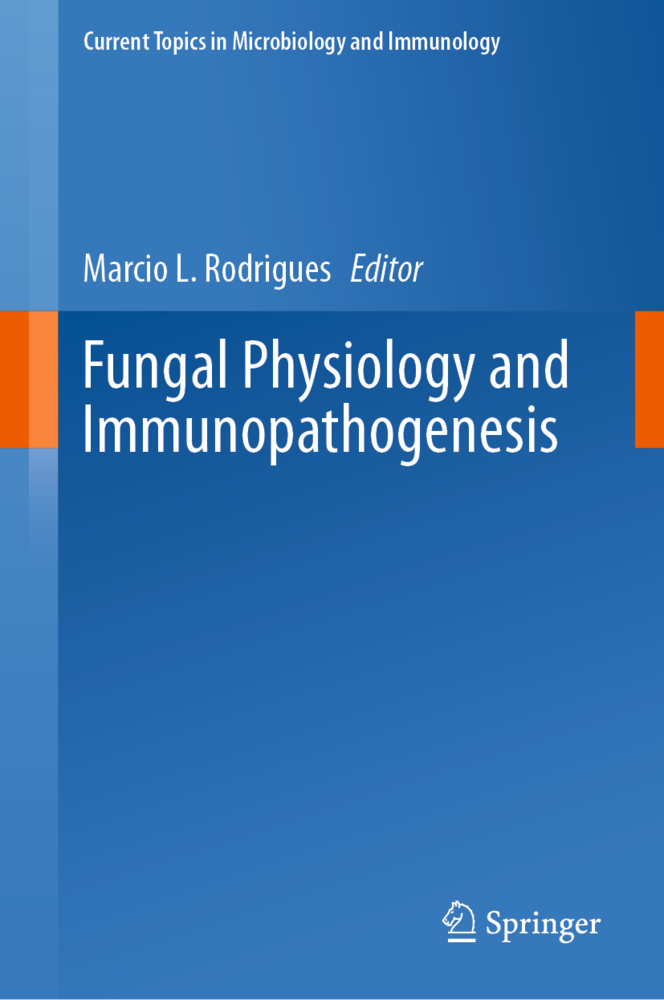
Fungal Physiology and Immunopathogenesis
Fungal Physiology and Immunopathogenesis
This volume offers an overview of the various aspects involved in the ability of fungi to damage host cells, and discusses cutting-edge approaches to the study of fungal pathogenesis. The first chapter illustrate the key roles of glycans and pigments, the most abundant surface components in fungal cells, in their interactions with host cells. The connections between cellular physiology and fungal pathogenesis are then discussed in the following chapters. Physiology-related processes affecting pathogenesis include fungal secretion, morphological transitions, and response to light.
In turn, the book illustrates mechanisms of damage to host cells using the Histoplasma capsulatum model of infection, and reviews the use of transcriptomic approaches to understand the mechanisms of interaction between fungal cells and host tissues. After a discussion of the immunological mechanisms underlying host susceptibility to fungal infections, the book's closing contribution reviews the mechanisms of interaction between fungi and other microbes, and the impact of this association on fungal pathogenesis. Given its scope, the book will appeal to scientists in the fields of mycology, microbiology, infectious diseases, biology and medicine.
Candida morphology and pathogenesis.- Fungal biofilms
Immunoactive fungal vesicles
Candida parapsilosis pathogenesis
Fungal circadian clocks and pathogenesis.- Cryptococcal pathogenesis
Nucleic acid export in fungi
Immunity to fungal infections
Fungal systems biology.
Login
Rodrigues, Marcio L.
| ISBN | 978-3-030-30239-9 |
|---|---|
| Media type | Book |
| Copyright year | 2020 |
| Publisher | Springer, Berlin |
| Length | VIII, 301 pages |
| Illustrations | VIII, 301 p. 23 illus., 19 illus. in color. |
| Language | English |