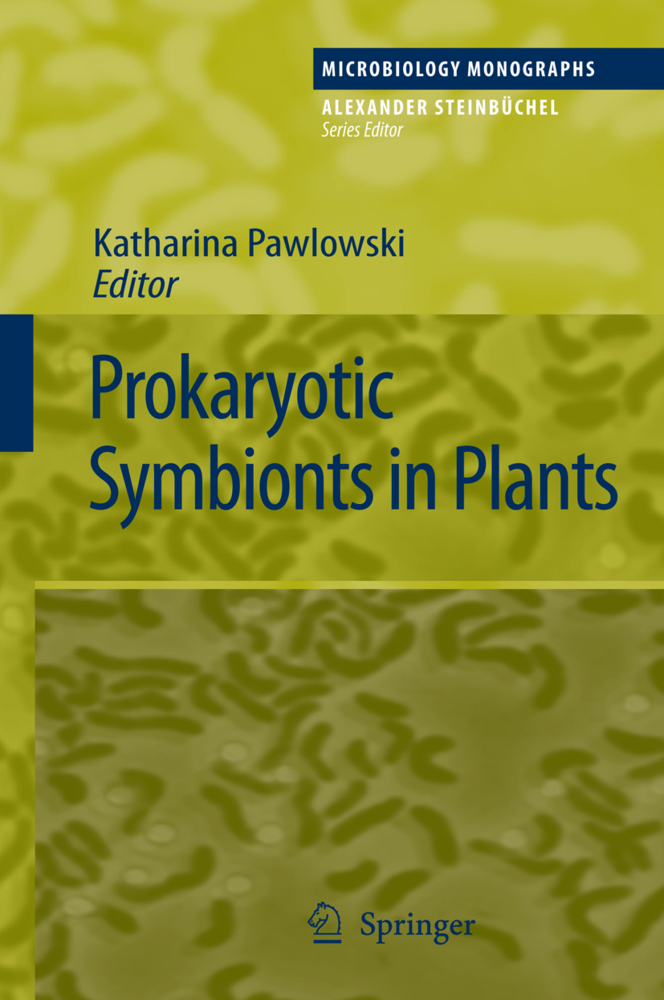
Prokaryotic Symbionts in Plants
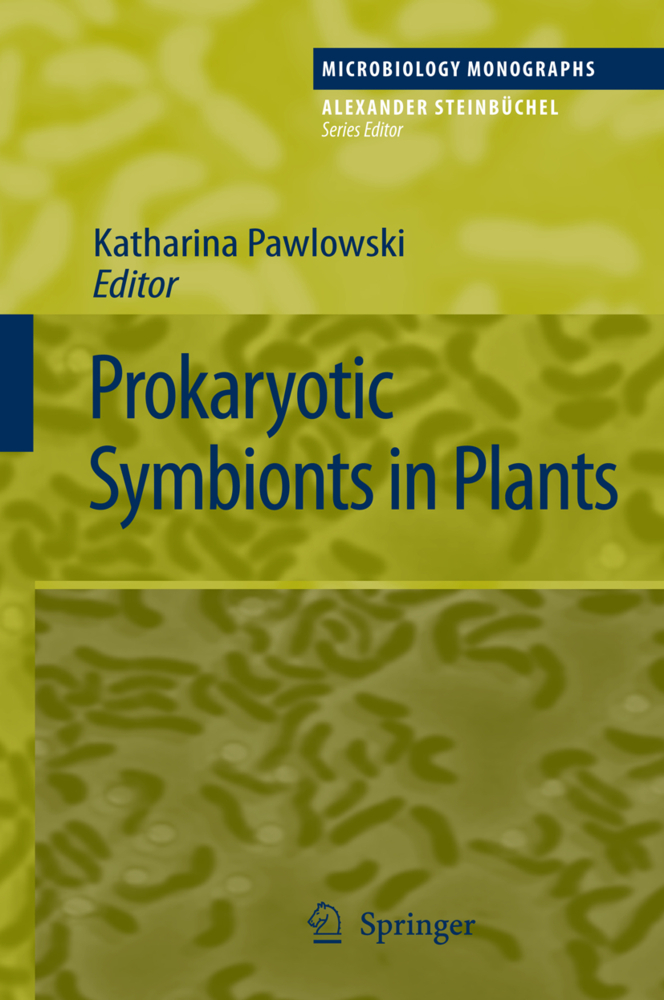
Prokaryotic Symbionts in Plants
Endophytic prokaryotes can invade the tissue of the host plant without triggering defense reactions or disease symptoms. Instead, they promote the growth of the host plant due to their ability to fix atmospheric dinitrogen and/or to produce plant growth-promoting substances.
This Microbiology Monographs volume presents up-to-date findings on the interactions between plants and beneficial prokaryotes, including the use of genomics for the analysis of plant-prokaryote symbioses and their evolution. Rhizobia-legume, actinorhizal and cyanobacterial symbioses are presented.
Rhizobia-Legume Symbioses
The Diversity and Evolution of RhizobiaErratum to The Diversity and Evolution of Rhizobia
Making Rhizobium-Infected Root Nodules
Functional Genomics of Rhizobia
Actinorhizal Symbioses
Evolution and Diversity of Frankia
Induction of Actinorhizal Nodules by Frankia
Physiology of Actinorhizal Nodules
Cyanobacterial Symbioses
Physiological Adaptations in Nitrogen-fixing Nostoc-Plant Symbiotic Associations
Why Does Gunnera Do It and Other Angiosperms Don't? An Evolutionary Perspective on the Gunnera-Nostoc Symbiosis
Cyanobacteria in Symbiosis with Cycads
Structural Characteristics of the Cyanobacterium-Azolla Symbioses
Relations Between Cyanobacterial Symbionts in Lichens and Plants
Diazotrophic Endophytes
Diazotrophic Bacterial Endophytes in Gramineae and Other Plants.
Login
Pawlowski, Katharina
| ISBN | 978-3-642-24259-5 |
|---|---|
| Media type | Book |
| Copyright year | 2011 |
| Publisher | Springer, Berlin |
| Length | VIII, 306 pages |
| Illustrations | VIII, 306 p. 48 illus., 16 illus. in color. |
| Language | English |