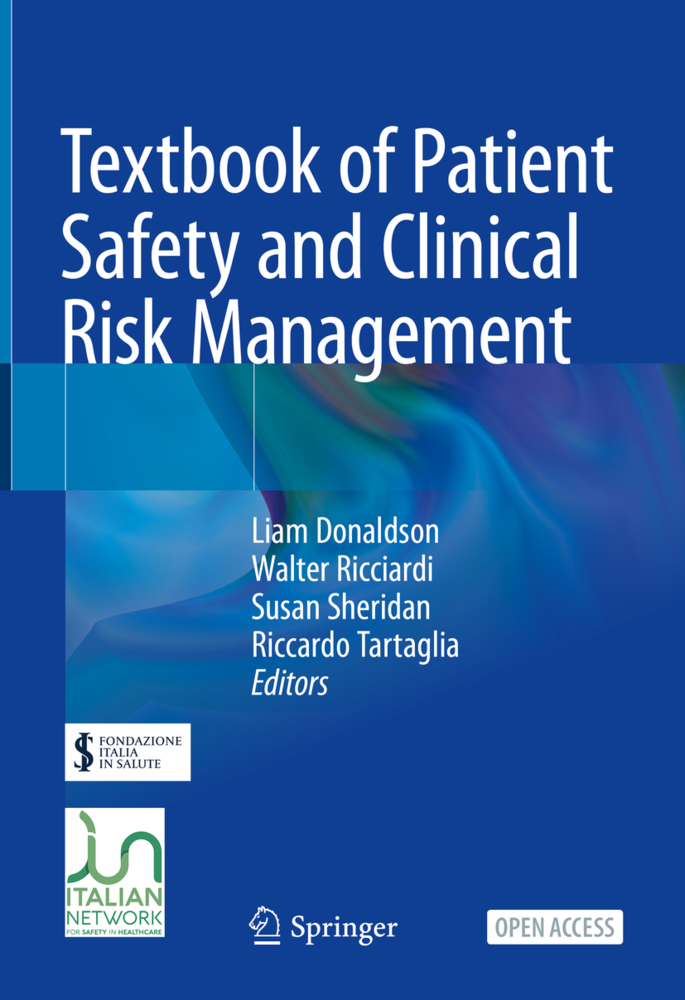
Textbook of Patient Safety and Clinical Risk Management
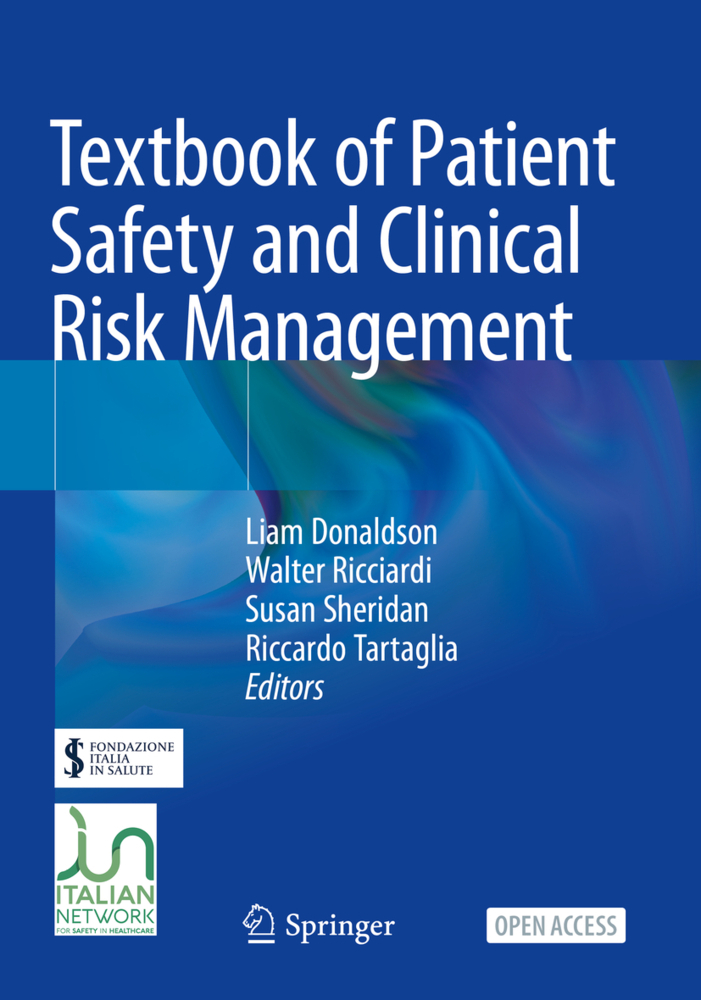
Textbook of Patient Safety and Clinical Risk Management
Implementing safety practices in healthcare saves lives and improves the quality of care: it is therefore vital to apply good clinical practices, such as the WHO surgical checklist, to adopt the most appropriate measures for the prevention of assistance-related risks, and to identify the potential ones using tools such as reporting & learning systems.
The culture of safety in the care environment and of human factors influencing it should be developed from the beginning of medical studies and in the first years of professional practice, in order to have the maximum impact on clinicians' and nurses' behavior. Medical errors tend to vary with the level of proficiency and experience, and this must be taken into account in adverse events prevention. Human factors assume a decisive importance in resilient organizations, and an understanding of risk control and containment is fundamental for all medical and surgical specialties.
This open access book offers recommendations and examples of how to improve patient safety by changing practices, introducing organizational and technological innovations, and creating effective, patient-centered, timely, efficient, and equitable care systems, in order to spread the quality and patient safety culture among the new generation of healthcare professionals, and is intended for residents and young professionals in different clinical specialties.
Part I. Introduction.- 1. Guidelines and Safety Practices for Improving Patient Safety
2. Brief story of a clinical risk manager
3. Human Error and Patient Safety
4. Looking forward to the future.- 5. Safer care: shaping the future
6. Patients for Patient Safety
7. Human Factors and Ergonomics in Health Care and Patient Safety from the Perspective of Medical Residents
Part II. Background
8. Patient Safety in the World
9. Infection Prevention and Control
10. The patient journey
11. Adverse event investigation and risk assessment
12. From theory to real world integration: implementation science and beyond
Part III. Patient safety in the main clinical specialties
13. Intensive care and anesthesiology
14. "Safe Surgery Saves Lives" .- 15. Emergency Department Clinical Risk
16. Obstetric Safety Patient
17. Patient Safety in the main clinical specialties
18. Risks in Oncology and Radiation Therapy
19. Orthopaedics and Traumatology
20.Patient Safety & Risk Management in Mental Health.- 21. Pediatrics
22. Patient safety in the main clinical specialties: Radiology
23. Organ Donor Risk Stratification in Italy
24. Patient Safety in Laboratory Medicine
25. Ophthalmology
IV Healthcare organization
26. Community and Primary Care.- 27. Complexity science as a frame for understanding the management and delivery of high quality and safer care
28. Measuring clinical workflow to improve quality and safety
29. Shiftwork Organization
30. Non Technical Skills in Healthcare
31. Medication safety
32. Digital technology and usabililty and ergonomics of medical devices
33. Lessons learned from the Japan Obstetric Compensation System for Cerebral Palsy: A novel system of data aggregation, investigation, amelioration, and no-fault compensation
34. Coping with the COVID -19 pandemic: roles and responsibilities for preparedness.
Anmelden
Donaldson, Liam
Ricciardi, Walter
Sheridan, Susan
Tartaglia, Riccardo
| ISBN | 978-3-030-59405-3 |
|---|---|
| Medientyp | Buch |
| Copyrightjahr | 2021 |
| Verlag | Springer, Berlin |
| Umfang | XIII, 496 Seiten |
| Abbildungen | XIII, 496 p. 53 illus., 39 illus. in color. |
| Sprache | Englisch |