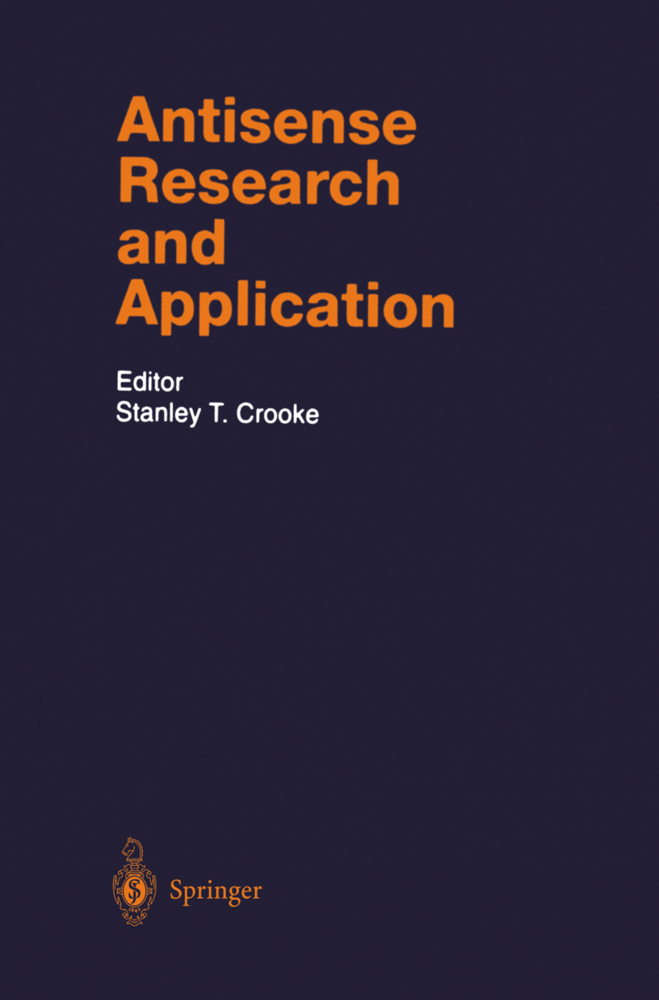
Antisense Research and Application
Antisense Research and Application
Antisense technology may result in dramatic changes in the therapy of many diseases and may provide tools to dissect pharmacological processes and to confirm the roles of various genes. In this volume, progress in the understanding of antisense technology and its use in creating new drugs is discussed. Potential caveats, pitfalls and limitations of the technologyare also presented. In the next few years the pace at which new molecular targets will be identified will increase exponentially as the sequencing of the human genome and of other genomes proceeds.
3 In Vitro Cellular Uptake, Distribution, and Metabolism of Oligonucleotides
4 Pharmacokinetic Properties of Phosphorothioates in Animals - Absorption, Distribution, Metabolism and Elimination
5 Toxicity of Oligodeoxynucleotide Therapeutic Agents
6 Pharmacokinetic Properties of Phosphorothioate Oligonucleotides in Immune Stimulation by Oligonucleotides in Humans
7 Safety and Tolerance of Phosphorothioates in Humans
8 Inmune Stimulation by Oligonucleotides
9 Pharmacological Inhibition of Dopaminergic and Other Neurotransmitter Receptors Using Antisense Oligodeoxynucleotides
10 Pharmacological Effects of Antisense Oligonucleotide Inhibition of Immediate-Early Response Genes in the CNS
11 Inhibition of G Proteins by Antisense Drugs
12 Use of Antisense Oligonucleotides to Modify Inflammatory Processes
13 Antisense Oligonucleotides and Their Anticancer Activities
14 Pharmacological Activity of Antisense Oligonucleotides in Animal Models of Disease
15 Clincial Antiviral Activities
16 Antisense Oligonucleotides to Protein Kinase C-a and C-raf Kinase: Rationale and Clinical Experience in Patients with Solid Tumors
17 Nucleic Acid Therapeutics for Human Leukemia: Development and Early Clinical Experience with Oligodeoxynucleotides Directed at c-myb
18 Properties of ISIS 2302, an Inhibitor of Intercellular Adhesion Molecule-1, Humans
19 Pharmacokinetics and Bioavailability of Antisense Oligonucleotides Following Oral and Colorectal Administrations in Experimental Animals
20 Antisense Properties of Peptide Nucleic Acid
21 Triple Helix Strategies and Progress.
1 Basic Principles of Antisense Therapeutics
2 Antisense Medicinal Chemistry3 In Vitro Cellular Uptake, Distribution, and Metabolism of Oligonucleotides
4 Pharmacokinetic Properties of Phosphorothioates in Animals - Absorption, Distribution, Metabolism and Elimination
5 Toxicity of Oligodeoxynucleotide Therapeutic Agents
6 Pharmacokinetic Properties of Phosphorothioate Oligonucleotides in Immune Stimulation by Oligonucleotides in Humans
7 Safety and Tolerance of Phosphorothioates in Humans
8 Inmune Stimulation by Oligonucleotides
9 Pharmacological Inhibition of Dopaminergic and Other Neurotransmitter Receptors Using Antisense Oligodeoxynucleotides
10 Pharmacological Effects of Antisense Oligonucleotide Inhibition of Immediate-Early Response Genes in the CNS
11 Inhibition of G Proteins by Antisense Drugs
12 Use of Antisense Oligonucleotides to Modify Inflammatory Processes
13 Antisense Oligonucleotides and Their Anticancer Activities
14 Pharmacological Activity of Antisense Oligonucleotides in Animal Models of Disease
15 Clincial Antiviral Activities
16 Antisense Oligonucleotides to Protein Kinase C-a and C-raf Kinase: Rationale and Clinical Experience in Patients with Solid Tumors
17 Nucleic Acid Therapeutics for Human Leukemia: Development and Early Clinical Experience with Oligodeoxynucleotides Directed at c-myb
18 Properties of ISIS 2302, an Inhibitor of Intercellular Adhesion Molecule-1, Humans
19 Pharmacokinetics and Bioavailability of Antisense Oligonucleotides Following Oral and Colorectal Administrations in Experimental Animals
20 Antisense Properties of Peptide Nucleic Acid
21 Triple Helix Strategies and Progress.
Anmelden
Crooke, Stanley T.
| ISBN | 978-3-540-63833-9 |
|---|---|
| Medientyp | Buch |
| Copyrightjahr | 1998 |
| Verlag | Springer, Berlin |
| Umfang | XXVI, 630 Seiten |
| Abbildungen | XXVI, 630 p. 118 illus., 6 illus. in color. |
| Sprache | Englisch |