Fundamentals of Electrochemistry
Principles, Methods, Materials, Applications
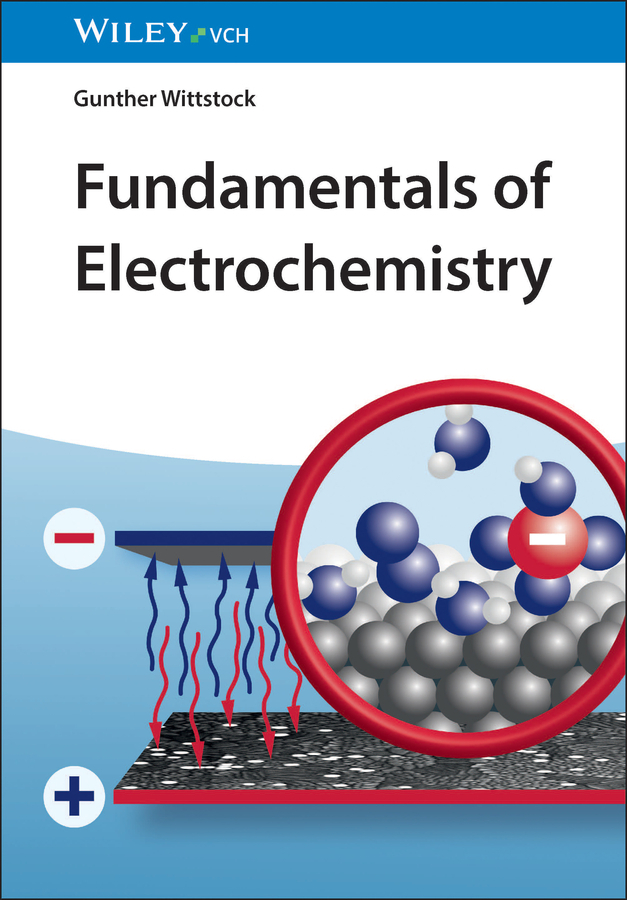
Fundamentals of Electrochemistry
Principles, Methods, Materials, Applications
Comprehensive introduction to the field of electrochemistry, covering the fundamentals, key experimental approaches for many current applications, and real-life examples
Fundamentals of Electrochemistry provides a profound introduction to the principles of the field in connection to key experimental approaches in the laboratory. This is complemented by a systematic coverage of the most important applications, illustrated by real-life examples presenting electrochemistry as a cross-sectional discipline.
Part I of the book presents the fundamentals focusing on key concepts at an introductory BSc level. The parts II-IV on methods, materials, and applications address advanced students from BSc research projects to PhD students.
Written by a highly qualified and prominent professor with extensive teaching and research experience in the field, Fundamentals of Electrochemistry explores topics including:
* Basics concepts of electrochemical cells, electrodes and electrolytes, energetics and kinetics of electrochemical reactions, and their coupling to transport processes
* Elucidation and application of mechanisms in electron transfer and ion transfer reactions
* Structure of the solid-electrolyte interfaces and its modification combined with the advanced characterization methods such as vibrational spectroscopy at surfaces, ellipsometry, surface plasmon resonance, spectroscopy of core shell electrons, X-ray diffraction, mass spectrometry, quartz crystal microbalance, and scanning probe techniques
* Electrodeposition by galvanic processes, underpotential deposition and electrodeposition of oxides, self-assembled monolayers, conducting polymers and organic-inorganic hybrid materials, solid electrolytes and semiconductors, corrosion
* Electroanalytical methods, electrochemical sensors and biosensors based on potentiometry, amperometry and a large variety of voltammetric methods; micro- and nanoelectrodes
* Energy conversion in batteries, fuel cells, electrolyzers, and electrochemical capacitors; electrosynthesis
The clear and modular structure supplemented by 800+ figures and worked-out examples, supporting different course concepts, makes Fundamentals of Electrochemistry the perfect companion for BSc, MSc, and PhD students in the fields of electrochemistry and related subjects.
Preface
Fundamentals of Electrochemistry provides a profound introduction to the principles of the field in connection to key experimental approaches in the laboratory. This is complemented by a systematic coverage of the most important applications, illustrated by real-life examples presenting electrochemistry as a cross-sectional discipline.
Part I of the book presents the fundamentals focusing on key concepts at an introductory BSc level. The parts II-IV on methods, materials, and applications address advanced students from BSc research projects to PhD students.
Written by a highly qualified and prominent professor with extensive teaching and research experience in the field, Fundamentals of Electrochemistry explores topics including:
* Basics concepts of electrochemical cells, electrodes and electrolytes, energetics and kinetics of electrochemical reactions, and their coupling to transport processes
* Elucidation and application of mechanisms in electron transfer and ion transfer reactions
* Structure of the solid-electrolyte interfaces and its modification combined with the advanced characterization methods such as vibrational spectroscopy at surfaces, ellipsometry, surface plasmon resonance, spectroscopy of core shell electrons, X-ray diffraction, mass spectrometry, quartz crystal microbalance, and scanning probe techniques
* Electrodeposition by galvanic processes, underpotential deposition and electrodeposition of oxides, self-assembled monolayers, conducting polymers and organic-inorganic hybrid materials, solid electrolytes and semiconductors, corrosion
* Electroanalytical methods, electrochemical sensors and biosensors based on potentiometry, amperometry and a large variety of voltammetric methods; micro- and nanoelectrodes
* Energy conversion in batteries, fuel cells, electrolyzers, and electrochemical capacitors; electrosynthesis
The clear and modular structure supplemented by 800+ figures and worked-out examples, supporting different course concepts, makes Fundamentals of Electrochemistry the perfect companion for BSc, MSc, and PhD students in the fields of electrochemistry and related subjects.
Preface
PART I: FUNDAMENTALS (ON THE LEVEL OF BSC, REFERENCE FOR LOOK UP FOR ENGINEERS, PHYSICISTS ETC.)
THE ELECTRODE REACTION -- THE FOCUS OF ELECTROCHEMISTRY
Current and Chemical Conversion in Electrochemical Cells
Electrodes and Ions (Definitions Electrode, Electrolyte, Anode, Cathode etc.)
Which Quantitative Relation Does Exist between Chemical Conversion and Charge?
Which Relation Does Exist between Electrical Current and Reaction Rate?
Galvanic Cells and Electrolysis Cells
THERMODYNAMICS OF ELECTROCHEMICAL REACTIONS
From Cell Voltage to Electrode Potentials
Which Relation Does Exist between Cell Voltages and Thermodynamic Potentials
Cells Voltages Are Caused by Charge Separation at Interfaces - the Galvani Voltage
Measurement of Cells Voltages and Application of Galvanic Cells (Preliminary Overview)
ELECTROCHEMICAL KINETICS ? HOMOGENEOUS AND HETEROGENEOUS PROCESSES
Coupling of Mass Transport and Interfacial Reactions
Kinetics of Charge-Transfer Step
MASS TRANSPORT AND BOUNDARY LAYERS
Overview and Definition
Migration
The Electrical Double Layer
Diffusion
Diffusion Layers
Summary and Outlook
PART II: EXPERIMENTAL METHODS IN ELECTROCHEMISTRY (LEVEL SENIOR BSC OR MSC/PHD)
ELECTROANALYTICAL METHODS AND ELECTROCHEMICAL SENSORS
Family Tree of Electroanalytical Methods
Potentiometry
Dynamic Electrochemical Methods
Amperometric Sensors
Voltammetry under Special Mass Transport Conditions -- Thin Layer Voltammetry and Voltammetry of Immobilized Redox Systems
Voltammetry under Special Mass Transport Conditions -- Microelectrodes
Basics of Electrochemical Instrumentation
MECHANISTIC ANALYSIS OF ELECTRON TRANSFER REACTIONS IN LIQUID ELECTROLYTES
Use of Diagnostic Criteria
Use of Digital Simulations
Zone Diagrams
Spectroscopic Identification of Products and Intermediates
ELECTROCHEMICAL IMPEDANCE SPECTROSCOPY
Ohmic Resistance and Ideal Capacitor in an Electrical AC Circle
Impedance Measurement in Electrochemical Cells
Equivalent Circuits
Development of Equivalent Circuits
Constant Phase Elements
Summary
INTERFACIAL ELECTROCHEMISTRY
Overview
Vibrational Spectroscopy at Surfaces
Ellipsometry
Surface Plasmon Resonance
Spectroscopy of Core Shell Electrons
X-Diffractions
Mass Spectrometry
Quartz Crystal Microbalance
Single Crystal Electrodes
A Second View on the Electrical Double Layer
Electrochemical Scanning Tunneling Microscopy (ECSTM) and electrochemical scanning force microscopy (ECSFM)
Scanning Electrochemical Microscopy (SECM)
Other Scanning Microscopies
PART III: ELECTROCHEMICAL MATERIAL SCIENCE (LEVEL MSC/PHD)
ELECTRODEPOSITION
Metal Deposition on Foreign Materials
Galvanic Processes
Electrodeposition of Oxides
SEMICONDUCTOR ELECTROCHEMISTRY
Structure and Bonding in Semiconductors
Semiconductor Electrodes
Application of Semiconductor Electrodes
SOLID ELECTROLYTES AND OTHER NON-CONVENTIONAL ELECTROLYTE SYSTEMS
Why Do Solids Contain Defects?
Ionic Conductivity of Solids
Boundary Layers in Ion-Conducting Solids
Electrochemistry in Molten Salts and Ionic Liquids
Conductivity in Glasses
Conductivity in Polymers
ELECTROCATALYSIS: MECHANISMS FOR THE REACTION OF IMPORTANT SMALL MOLECULES
Concepts
Experimental Methods for the Study of Electrocatalytic Reactions
Water Electrolysis
H2/H+
Oxygen Reduction Reaction
Importance of Reactive Oxygen Species in Biology and Technology
CO2 Reduction
Electrocatalytic Oxidation of Small Organic Molecules
MODIFIED ELECTRODES
Electrochemistry of Self-Assembled Monolayers
Electronically Conductive Polymers
Organic-Inorganic Hybrid Materials
PART IV: SELECTED APPLICATION OF ELECTROCHEMISTRY (LEVEL, SENIOR BSC, MOSTLY MSC/PHD)
<
Anmelden
Wittstock, Gunther
Wittstock, Gunther
Marken, Frank
Heineman
| ISBN | 9783527347216 |
|---|---|
| Medientyp | Buch |
| Auflage | 1. Auflage |
| Copyrightjahr | 2026 |
| Verlag | Wiley-VCH |
| Umfang | 1088 Seiten |
| Abbildungen | 134 SW-Abb., 857 Farbabb. |
| Sprache | Englisch |