Haploidentical Transplantation

Concepts & Clinical Application

Haploidentical Transplantation
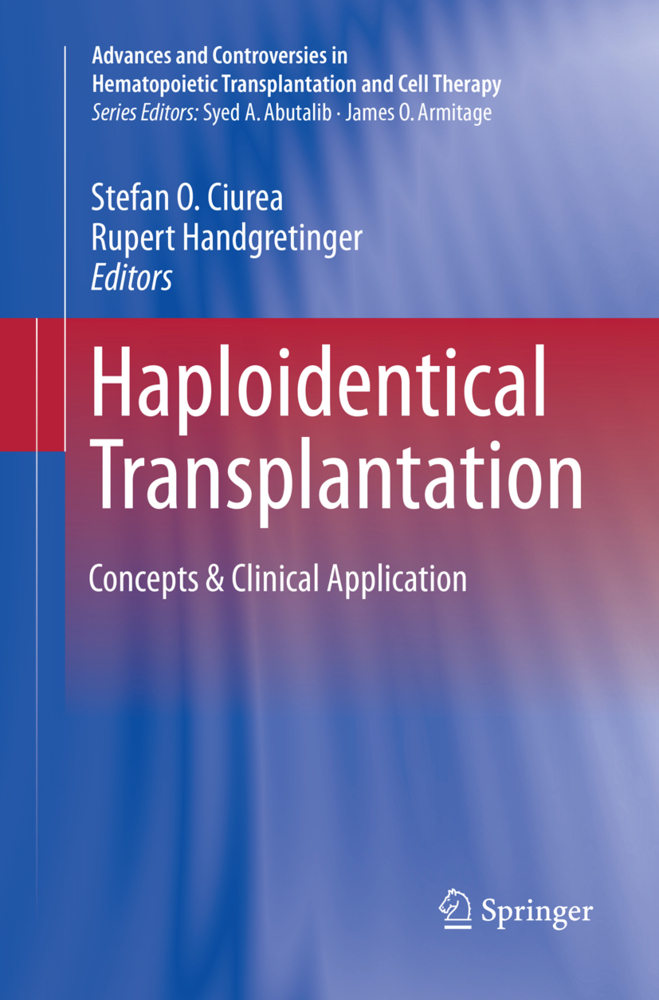
Concepts & Clinical Application

90,94 €*

lieferbar in ca. 2-4 Werktagen

Falls Sie eine Lieferung außerhalb DE, AT oder CH wünschen, nutzen Sie bitte unser Kontaktformular für eine Anfrage.

In this book, world-renowned experts in the field express well-reasoned opinions on a range of issues and controversies relating to haploidentical transplantation with the aim of providing practicing hematologists with clinically relevant and readily applicable information. Among the areas covered are graft manipulation and methods to control T-cell alloreactivity, the nature of the ideal graft and donor, haploidentical transplantation in pediatric and adult patients with malignant and nonmalignant diseases, immunologic reconstitution following transplantation, complications, and the prevention and treatment of relapse post transplantation. Attention is drawn to the implications of high-impact clinical trials whenever such trials are available. The readily intelligible text is complemented by numerous helpful tables, algorithms, and figures. The book will provide practical support for hematologists and transplant physicians as they attempt to provide optimal care in this exciting but increasingly complex medical specialty.


Historical perspective and current trends in haploidentical transplantion

Part 1: Graft manipulation and methods to control T-cell alloreactivity. -Positive CD34+ cell selection
Selective allo-depletion: beta and CD19+ cell T cell depletion
T cell addback in T- cell depleted haploidentical transplant
Hematopoietic myeloid growth factor primed bone marrow and peripheral blood hematopoietic progenitor cells
Photodepletion of allo-reactive T cells
Post-transplant cyclophosphamide in haploidentical transplant
Part 2: Ideal graft & donor
Graft source: Marrow versus peripheral blood with PTCy- Does it matter?
Anti-HLA antibodies: Assessment and mitigating strategies
Selection of haploidentical donors: What is the art?
Myeloablative versus non-myeloablative conditioning regimen- Does it matter and how best to select?
Part 3: Disease-specific pediatric population
Nonmalignant diseases in children

en.-="" part="" 4:="" disease-specific="" adult="" population.-="" non-malignant="" adults.-="" acute="" myelogenous="" leukemia="" lymphomas-="" parameswaran="" hari.-="" chronic="" leukemias="" and="" myeloproliferative="" neoplasms.-="" immunologic="" reconstitution="" after="" haploidentical="" transplantation.-="" prevention="" treatment="" of="" relapse="" transplant.-="" unique="" complications="" limitations="" future="" prospects="" transplantation
ISBN 978-3-030-09611-3
Medientyp Buch
Copyrightjahr 2019
Verlag Springer, Berlin
Umfang XI, 337 Seiten
Sprache Englisch