How to Perform a Systematic Literature Review
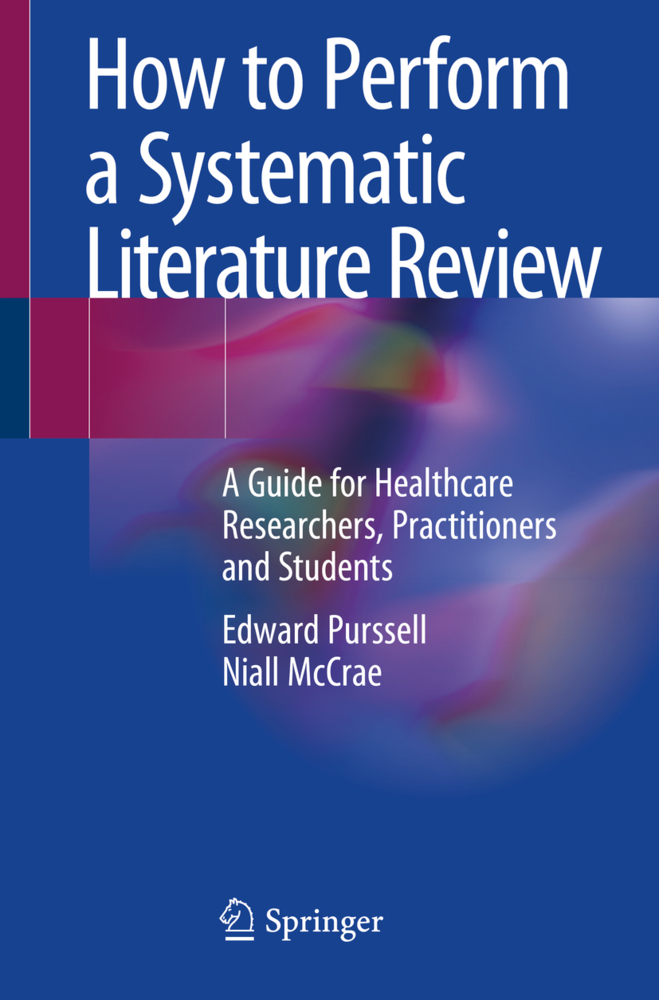
How to Perform a Systematic Literature Review
The systematic review is a rigorous method of collating and synthesizing evidence from multiple studies, producing a whole greater than the sum of parts. This textbook is an authoritative and accessible guide to an activity that is often found overwhelming. The authors steer readers on a logical, sequential path through the process, taking account of the different needs of researchers, students and practitioners. Practical guidance is provided on the fundamentals of systematic reviewing and also on advanced techniques such as meta-analysis. Examples are given in each chapter, with a succinct glossary to support the text.
This up-to-date, accessible textbook will satisfy the needs of students, practitioners and educators in the sphere of healthcare, and contribute to improving the quality of evidence-based practice. The authors will advise some freely available or inexpensive open source/access resources (such as PubMed, R and Zotero) to help students how to perform a systemic review, in particular those with limited resources.
Introduction
A brief history of the systematic reviewThe aim and scope of a systematic review: a logical approach, developing a question
Systematic reviews/other types of review
Searching for literature
Screening search results: a 1-2-3 approach
Critical appraisal: assessing the quality of studies
Meta-analysis: reviewing quantitative studies
Metasynthesis: reviewing qualitative studies
Mixed-method synthesis
Meaning and implications
Making an impact
Appendices
Glossary.
Anmelden
| ISBN | 978-3-030-49671-5 |
|---|---|
| Medientyp | Buch |
| Auflage | 1st ed. 2020 |
| Copyrightjahr | 2020 |
| Verlag | Springer, Berlin |
| Umfang | VII, 188 Seiten |
| Abbildungen | VII, 188 p. 19 illus., 12 illus. in color. |
| Sprache | Englisch |