Immunology: Overview and Laboratory Manual
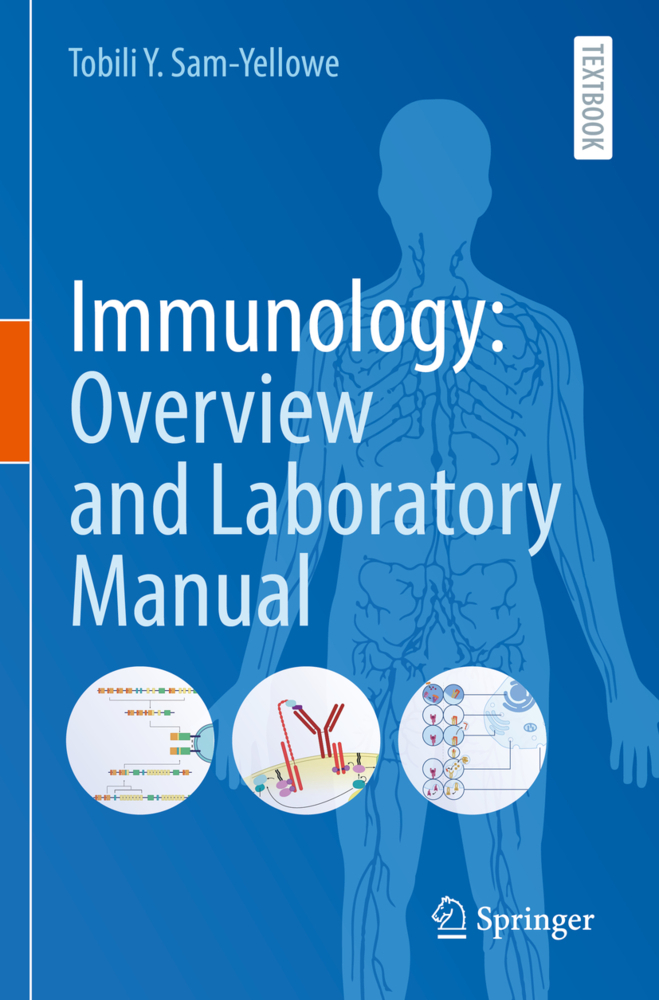
Immunology: Overview and Laboratory Manual
A two-in-one text providing teaching lab students with an overview of immunology as well as a lab manual complete with current standard exercises.
Section I of this book provides an overview of the immune system and immunity, and includes review questions, problem sets, case studies, inquiry-based questions, and more to provide students with a strong foundation in the field. Section II consists of twenty-two lab exercises focused on key concepts in immunology, such as antibody production, cell separation, cell function, immunoassays, Th1/Th2 cytokine detection, cell and tissue culture methods, and cell and molecular biology techniques. Appendices include safety information, suggested links and readings, and standard discipline processes, protocols, and instructions.
Ch 2: Components of immunity
Ch 3: Hematopoiesis
Ch 4: The Immune system: pathogen sensing and detection
Ch 5: Lymphoid organs
Ch 6: Innate and Adaptive immunity
Ch 7: Leukocyte homing, migration and recirculation
Ch 8: Apoptosis
Ch 9: Antigens
Ch 10: B cell development, activation and immunoglobulin structure
Ch 11: Immunoglobulin and T cell receptor gene rearrangements
Ch 12: Major histocompatibility complex proteins
Ch 13: T cell development and T cell receptor structure
Ch 14: Cytokines
Ch 15: Lymphocyte signals
Ch 16: Complement fixation
Ch 17: Cell mediated immunity
Ch 18: Hypersensitivities
Ch 19: Parasite Immunity
Ch 20: Vaccines
Ch 21: Transplantation
Ch 22: Immune regulation and autoimmunity
Ch 23: Immunodeficiencies
Ch 24: Cancer
Ch 25: Practice questions
Ch 26: Study guide for exam. Part II. Laboratory Manual
27. Immunology laboratory policies
28. Instructions for notebook entries
29. Instructions for writing lab reports
30. Lab report topics
31. Exercise 1: Using a compound microscope
32. Exercise 2: Pipetting and dilution technique, identification of mouse lymphoid organs
33. Exercise 3: Blood Cell Preparation, Leukocyte differentiation and ABO Blood Typing
34. Exercise 4: Single Suspension of Mouse Spleen cells, Cell Viability Assays, and Identification of specific cells using surface antigens
35. Exercise 5: Isolation of mouse peritoneal macrophages: In vitro phagocytosis of bacterial cells
36. Exercise 6: Clearance of bacteria from mouse blood by the RES
37. Exercise 7: Hemolytic Plaque assay (The Jeme Plaque Assay)
38. EXERCISE 8: Rabbit and Mouse Immunizations- Preparation of Polyclonal antibodies and screening assays
39. EXERCISE 9: Determination of Antibody Titer: Screening Techniques
40. EXERCISE 10: Immunodiffusion and Immunoelectrophoresis
41. EXERCISE 11: Protein Affinity Purification of Rabbit IgG
42. EXERCISE 12: Sodium Dodecyl Sulfate Polyacrylamide Gel Electrophoresis (SDS-PAGE)
43. EXERCISE 13: Immunoblotting (Western Blotting)
44. Exercise 14: Protein Assay
45. Exercise 15: Enzyme-linked Immunosorbent Assay (ELISA)
46. EXERCISE 16: Enzyme-Linked Immunospot Assay (ELISPOT)
47. EXERCISE 17: Immunofluorescence assay (IFA)
48. EXERCISE 18: Flow Cytometry
49.EXERCISE 19: Complement Fixation Assays
50. Tissue Cell Culture Techniques
51. EXERCISE 20: Mitogen Induced Response of Lymphocytes:Detection of Band T cell Lymphocytes Using Immunofluorescence
52. Exercise 21: Induction of IL-2 Secretion from Mouse Lymphoma Cells
53. EXERCISE 22: Adoptive Transfer of Lymphocytes: Band T cell Cooperation for Antibody Production
54. EXERCISE 23: Macrophage Migration Inhibition
55. EXERCISE 24: Monoclonal Antibody Preparation
56. EXERCISE 25: Immunization of mice with a recombinant protein
57. EXERCISE 26: Polarization of T helper cells into TH1 subset
58. Exercise 27: Immunoprecipitation
59. EXERCISE 28: Induction of apoptosis in T lymphocytes and detection of apoptotic markers
60. EXERCISE 29: Cloning and sequencing of cDNAs of mouse variable regions of H and L chains of monoclonal antibodies
Appendix
Sample Practice Questions.
Section I of this book provides an overview of the immune system and immunity, and includes review questions, problem sets, case studies, inquiry-based questions, and more to provide students with a strong foundation in the field. Section II consists of twenty-two lab exercises focused on key concepts in immunology, such as antibody production, cell separation, cell function, immunoassays, Th1/Th2 cytokine detection, cell and tissue culture methods, and cell and molecular biology techniques. Appendices include safety information, suggested links and readings, and standard discipline processes, protocols, and instructions.
Part I: Overview of Immunity
Ch 1: ImmunityCh 2: Components of immunity
Ch 3: Hematopoiesis
Ch 4: The Immune system: pathogen sensing and detection
Ch 5: Lymphoid organs
Ch 6: Innate and Adaptive immunity
Ch 7: Leukocyte homing, migration and recirculation
Ch 8: Apoptosis
Ch 9: Antigens
Ch 10: B cell development, activation and immunoglobulin structure
Ch 11: Immunoglobulin and T cell receptor gene rearrangements
Ch 12: Major histocompatibility complex proteins
Ch 13: T cell development and T cell receptor structure
Ch 14: Cytokines
Ch 15: Lymphocyte signals
Ch 16: Complement fixation
Ch 17: Cell mediated immunity
Ch 18: Hypersensitivities
Ch 19: Parasite Immunity
Ch 20: Vaccines
Ch 21: Transplantation
Ch 22: Immune regulation and autoimmunity
Ch 23: Immunodeficiencies
Ch 24: Cancer
Ch 25: Practice questions
Ch 26: Study guide for exam. Part II. Laboratory Manual
27. Immunology laboratory policies
28. Instructions for notebook entries
29. Instructions for writing lab reports
30. Lab report topics
31. Exercise 1: Using a compound microscope
32. Exercise 2: Pipetting and dilution technique, identification of mouse lymphoid organs
33. Exercise 3: Blood Cell Preparation, Leukocyte differentiation and ABO Blood Typing
34. Exercise 4: Single Suspension of Mouse Spleen cells, Cell Viability Assays, and Identification of specific cells using surface antigens
35. Exercise 5: Isolation of mouse peritoneal macrophages: In vitro phagocytosis of bacterial cells
36. Exercise 6: Clearance of bacteria from mouse blood by the RES
37. Exercise 7: Hemolytic Plaque assay (The Jeme Plaque Assay)
38. EXERCISE 8: Rabbit and Mouse Immunizations- Preparation of Polyclonal antibodies and screening assays
39. EXERCISE 9: Determination of Antibody Titer: Screening Techniques
40. EXERCISE 10: Immunodiffusion and Immunoelectrophoresis
41. EXERCISE 11: Protein Affinity Purification of Rabbit IgG
42. EXERCISE 12: Sodium Dodecyl Sulfate Polyacrylamide Gel Electrophoresis (SDS-PAGE)
43. EXERCISE 13: Immunoblotting (Western Blotting)
44. Exercise 14: Protein Assay
45. Exercise 15: Enzyme-linked Immunosorbent Assay (ELISA)
46. EXERCISE 16: Enzyme-Linked Immunospot Assay (ELISPOT)
47. EXERCISE 17: Immunofluorescence assay (IFA)
48. EXERCISE 18: Flow Cytometry
49.EXERCISE 19: Complement Fixation Assays
50. Tissue Cell Culture Techniques
51. EXERCISE 20: Mitogen Induced Response of Lymphocytes:Detection of Band T cell Lymphocytes Using Immunofluorescence
52. Exercise 21: Induction of IL-2 Secretion from Mouse Lymphoma Cells
53. EXERCISE 22: Adoptive Transfer of Lymphocytes: Band T cell Cooperation for Antibody Production
54. EXERCISE 23: Macrophage Migration Inhibition
55. EXERCISE 24: Monoclonal Antibody Preparation
56. EXERCISE 25: Immunization of mice with a recombinant protein
57. EXERCISE 26: Polarization of T helper cells into TH1 subset
58. Exercise 27: Immunoprecipitation
59. EXERCISE 28: Induction of apoptosis in T lymphocytes and detection of apoptotic markers
60. EXERCISE 29: Cloning and sequencing of cDNAs of mouse variable regions of H and L chains of monoclonal antibodies
Appendix
Sample Practice Questions.
Anmelden
Sam-Yellowe, Tobili Y.
| ISBN | 978-3-030-64688-2 |
|---|---|
| Medientyp | Buch |
| Copyrightjahr | 2022 |
| Verlag | Springer, Berlin |
| Umfang | XX, 471 Seiten |
| Abbildungen | XX, 471 p. 61 illus., 26 illus. in color. |
| Sprache | Englisch |