Perioperative Management of Pacemaker Patients
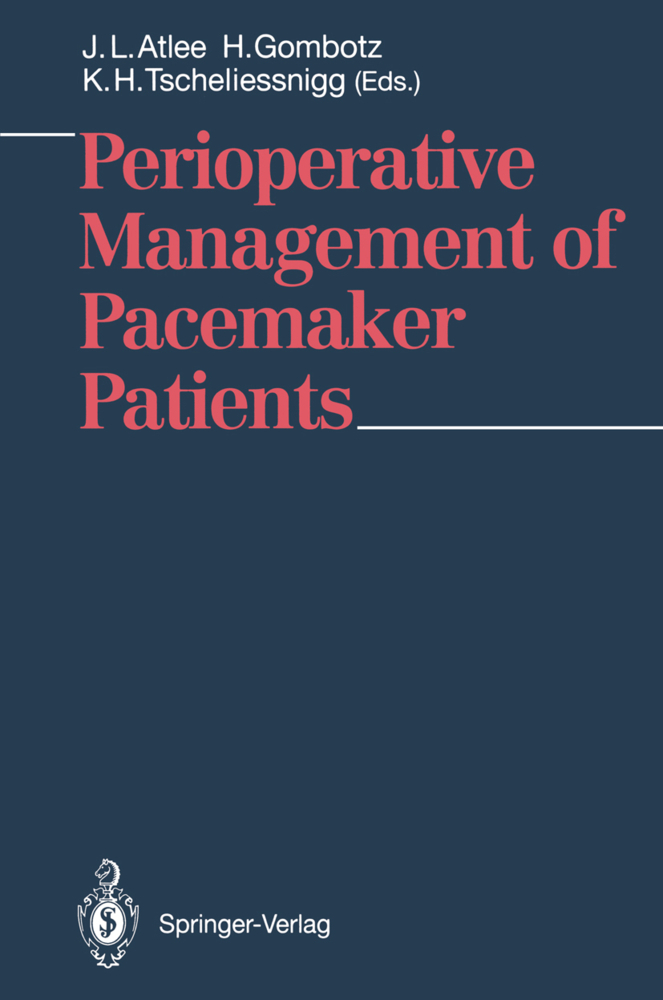
Perioperative Management of Pacemaker Patients
A symposium, "Perioperative Management of Pacemaker Patients", was held in May 1990 at the Karl-Franzens-Universitat, Landeskrankenhaus Graz, Austria. The purpose of the symposium, organized by the Departments of Anesthesiology and Surgery, was to discuss the current status of permanent pacemaker technology, emerging developments in this field, legal issues, indications and methods for tempor ary perioperative pacing, and the potential for pacemaker malfunction and adverse patient-pacemaker interactions in perioperative and other medical settings. It was hoped that participants would come to some consensus concerning recommendations for satisfactory perioperative management of pacemaker patients. This symposium was probably the fIrst occasion ever that brought together representatives of the pacemaker industry, implanting physicians, and physicians responsible for the management of pacemaker patients in perioperative and other hospital settings to discuss these important matters. Certainly, it was recognized by all who attended that there existed at the time little in the way of substantial knowledge of how to best manage pacemaker patients or patients with possible indications for temporary pacing in "unique" hospital settings especially with exposure to electroma gnetic and other potential interference, but in the absence of professional persons with direct knowledge of pacemakers and related devices. Much new information was presented and useful ideas exchanged, so that three symposium participants were of the opinion that papers presented at this meeting should be published as a collective work.
Prevention of Crosstalk in Dual Chamber Pacemakers
Modern Pacemakers
Rate-Responsive Cardiac Pacing
Pacemakers in Children
Implantable Cardioverter-Defibrillator
Electromagnetic Interference and Cardiac Pacemakers
Radiofrequency Transmission and Cardiac Pacemakers
Nuclear Magnetic Resonance Imaging in Pacemaker Patients
Radiation Therapy in Cardiac Pacemaker Patients
Extracorporal Shock Wave Lithotripsy in Pacemaker Patients
Pacemaker Malfunction: The European Legal Perspective (with Particular Emphasis on Austrian Law)
Indications for Pacing: The Cardiologist's Perspective
Place of Pacing in Cardiopulmonary Resuscitation
Holter Monitoring for Preoperative Assessment of Bradycardic Arrhythmias
Temporary Perioperative Pacing
Pacemaker Malfunction in Perioperative Settings
Guidelines for the Perioperative Management of Pacemaker and Automatic Internal Cardioverter-Defibrillator Patients.
Current Status of Pacemaker Technology
Saftey Standards for Cardiac PacemakersPrevention of Crosstalk in Dual Chamber Pacemakers
Modern Pacemakers
Rate-Responsive Cardiac Pacing
Pacemakers in Children
Implantable Cardioverter-Defibrillator
Electromagnetic Interference and Cardiac Pacemakers
Radiofrequency Transmission and Cardiac Pacemakers
Nuclear Magnetic Resonance Imaging in Pacemaker Patients
Radiation Therapy in Cardiac Pacemaker Patients
Extracorporal Shock Wave Lithotripsy in Pacemaker Patients
Pacemaker Malfunction: The European Legal Perspective (with Particular Emphasis on Austrian Law)
Indications for Pacing: The Cardiologist's Perspective
Place of Pacing in Cardiopulmonary Resuscitation
Holter Monitoring for Preoperative Assessment of Bradycardic Arrhythmias
Temporary Perioperative Pacing
Pacemaker Malfunction in Perioperative Settings
Guidelines for the Perioperative Management of Pacemaker and Automatic Internal Cardioverter-Defibrillator Patients.
Atlee, J. L.
Gombotz, H.
Tscheliessnigg, Karl-Heinz
| ISBN | 978-3-540-53874-5 |
|---|---|
| Medientyp | Buch |
| Copyrightjahr | 1992 |
| Verlag | Springer, Berlin |
| Umfang | XII, 156 Seiten |
| Sprache | Englisch |