Stem Cell Genetics for Biomedical Research
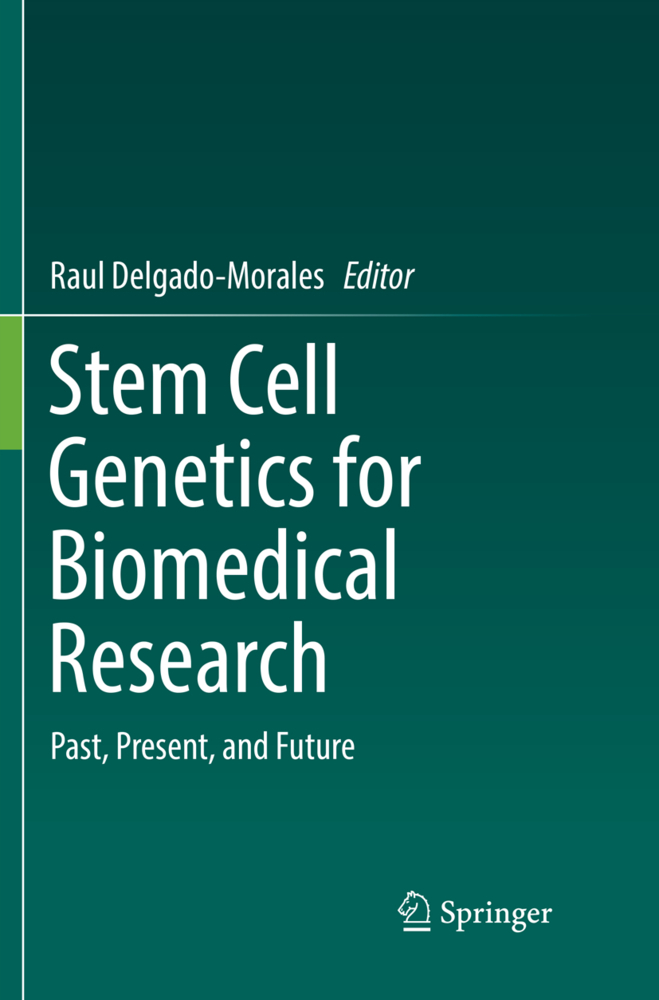
Stem Cell Genetics for Biomedical Research
This book looks at where stem cell technology is presently and how it is instrumental in advancing the field of disease modeling and cell transplantation. By focusing on major human disorders such as Alzheimer's disease, cancer, and heart disorders, the book summarizes the major findings in the field of human stem cells and dissect the current limitations on our understanding of stem cells biology. The chapters focus on the genetics, genomics, epigenetics and physiology of stem cells models, together with technological advances on molecular biology such as CRISPR/Cas9 or epigenetic editing, that will be instrumental in the future of human disease modeling and treatment.
In base of the limitations of current disease models and in front of the unmet necessity of finding therapeutical interventions for human disorders, the availability of stem cell technology has opened new doors for several fields. The unlimited self-renewal capacity and more extensive differentiation potential of stem cells offers a theoretically inexhaustible and replenishable source of any cell subtype. Since Professor Shinya Yamanaka described it, 10 years ago in his seminal paper, that somatic cells could be reprogrammed to inducible stem cells (iPSC) just by expressing four transcription factors, the field of has exploded, especially its applications in biomedical research.
Part I: Stem cells for brain disorders
Chapter1: Human induced pluripotent stem cell-derived neurons to model and gain insights into Alzheimer's disease pathogenesis
Chapter2: Modeling schizophrenia with human stem cells
Chapter3: Rett Syndrome and Stem Cell research
Chapter4: Stem Cell Applications in Spinal Cord Injury: A Primer
Chapter5: Cell-Based Therapy for Retinal Degenerative Disease
Chapter6: Past, present and future of cell based-therapy in progressive multiple sclerosis.- Part II: Stem cells for cardiovascular diseases
Chapter7: Cardiac Stem Cells: a plethora of potential therapies for myocardial regeneration within reach
Chapter8: Human Induced Pluripotent Stem Cell-derived Cardiomyocytes in the Evaluation of Cardiotoxic Potential of Drugs.- Part III: Stem cells for general medicine
Chapter9: Regenerative medicine for diabetes treatment: new beta-cell sources
Chapter10: Dental pulp stem cells promote wound healing and muscle regeneration
Chapter11: From bench to bedside of mesenchymal Stem Cells use for Rheumatoid Arthritis treatment
Chapter12: Stem Cells and Cancer
Chapter13: The relevance of induced pluripotent stem cells for the study of physiological and premature aging.- Part IV: Technical challenges and future
Chapter14: Pluripotent stem cell banks
Chapter15: Genetic and Epigenetic engineering: the CRISPR/Cas9 era.
Anmelden
Delgado-Morales, Raul
| ISBN | 978-3-030-08076-1 |
|---|---|
| Medientyp | Buch |
| Copyrightjahr | 2018 |
| Verlag | Springer, Berlin |
| Umfang | XI, 426 Seiten |
| Abbildungen | XI, 426 p. 32 illus. in color. |
| Sprache | Englisch |