Sustainable Business Model Innovations in Socio-Technical Transitions
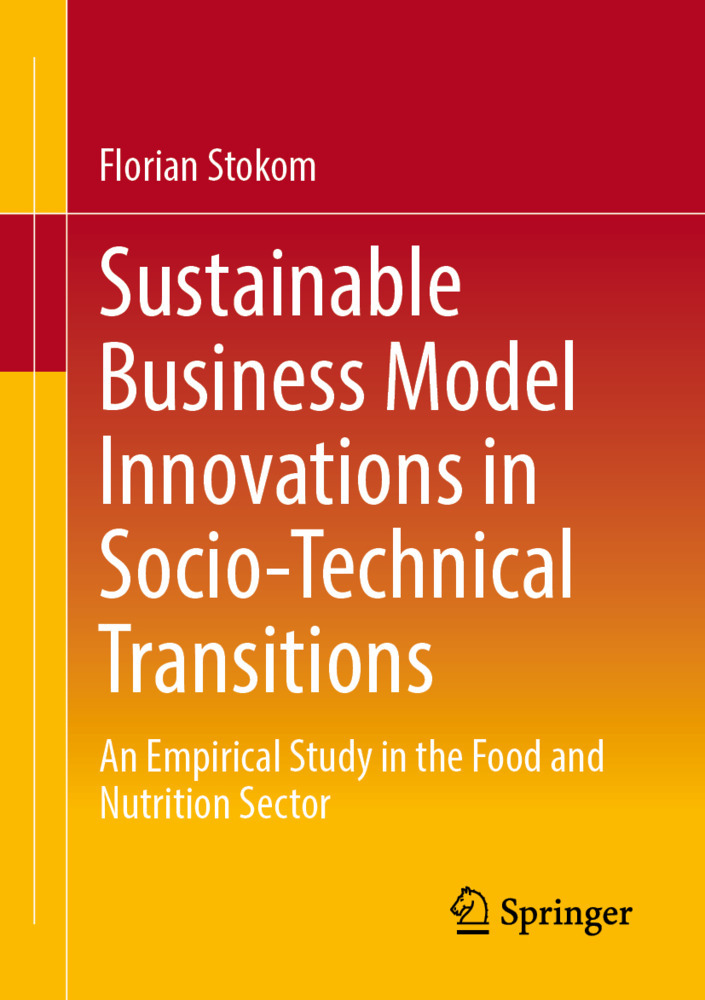
Sustainable Business Model Innovations in Socio-Technical Transitions
Sustainable business model innovations are regarded as a key lever for building a future-proof economy. But how can they be implemented within the constraints and opportunities of existing institutional frameworks? This book examines the role of companies as active agents of change in sociotechnical transitions, with a particular focus on the food and nutrition sector.
Drawing on six case studies, the work explores how entrepreneurs strategically respond to their institutional environment while simultaneously shaping it through their business model innovations. At its core is the question of how sustainable innovations emerge, gain legitimacy, and can be scaled within complex systems.
The study provides both theoretical insights into the relationship between business models and sustainability transitions and practical implications for actors seeking to actively contribute to the transition toward a more sustainable economy.
1. Introduction
2. Conceptual Foundations of the Study
3. State of Research on Business Models in Sustainability Transitions
4. Neo-Institutional Theory as a Theoretical Explanatory Framework
5. Evaluation of the Literature and Development of the Propositions and Analytical Framework
6. Empirical Investigation
7. Cross-Case Analysis and Adaptation of the Theoretical Framework
8. Addressing the Research Questions and a Revised Model of the Interaction Between Sustainable Business Model Innovations and Their Institutional Environment
9. Conclusion.
Anmelden
Stokom, Florian
| ISBN | 978-3-658-52966-6 |
|---|---|
| Medientyp | Buch |
| Copyrightjahr | 2026 |
| Verlag | Springer, Berlin |
| Abbildungen | XVII, 322 p. 15 illus., 2 illus. in color. |
| Sprache | Englisch |