
The Influence of ESG on Credit Risk
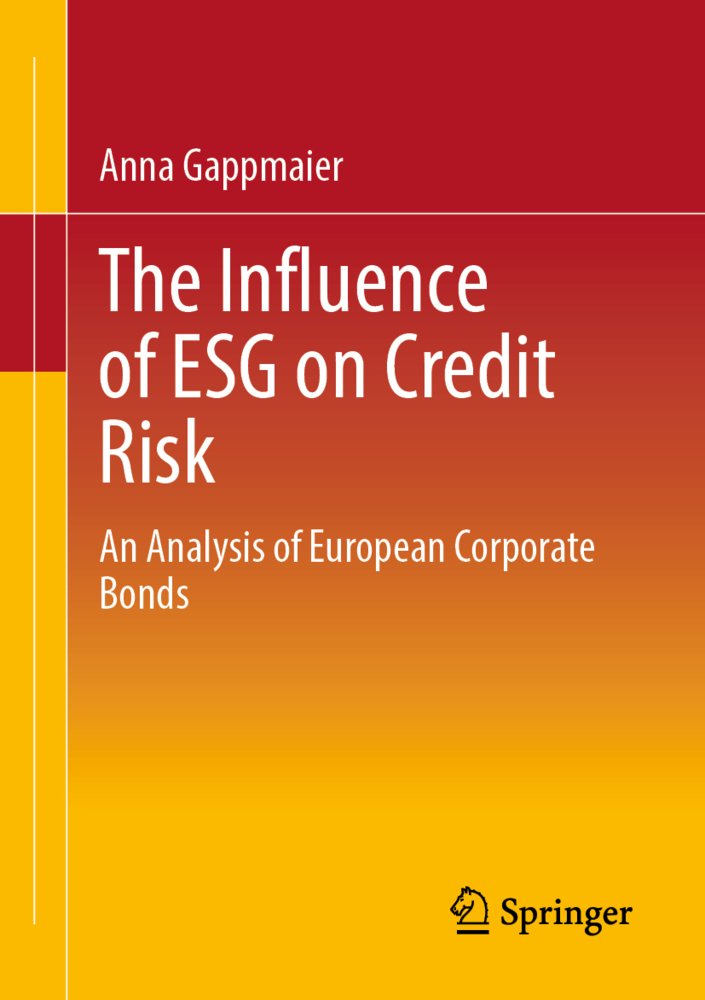
The Influence of ESG on Credit Risk
The increasing relevance of ESG (Environmental, Social, and Governance) in financial research and practice is driven by materiality, investor demand, and regulatory developments. Since ESG initiatives often entail (high) costs for companies, the question arises whether such investments pay off in terms of higher performance or lower risk. Previous research has primarily focused on the shareholder value perspective. More recent studies examine ESG from a risk perspective, mainly equity-based. However, studies exploring the relationship between ESG and credit risk remain scarce, especially in the European context. From a principal-agent theory perspective, it can be assumed that creditors evaluate ESG investments differently than owners. Creditors are primarily concerned with the servicing of their claims from the company s cash flow and generally favor less risky investments. The aim of this study is to provide a comprehensive overview of the existing empirical literature and to expand it through an original empirical investigation.
Introduction
ESG
ESG and Credit Risk
Interim Conclusion and Hypothesis Development
Methodology of the Empirical Study on ESG and Credit Risk
Results of the Empirical Study on ESG and Credit Risk
Discussion of the Results
Conclusion.
Anmelden
Gappmaier, Anna
| ISBN | 978-3-658-49089-8 |
|---|---|
| Medientyp | Buch |
| Copyrightjahr | 2025 |
| Verlag | Springer Nature Customer Service Center GmbH Europaplatz 3|69115|Heidelberg|DE |
| Umfang | XXII, 238 Seiten |
| Abbildungen | XXII, 238 p. 38 illus., 3 illus. in color. |
| Sprache | Englisch |