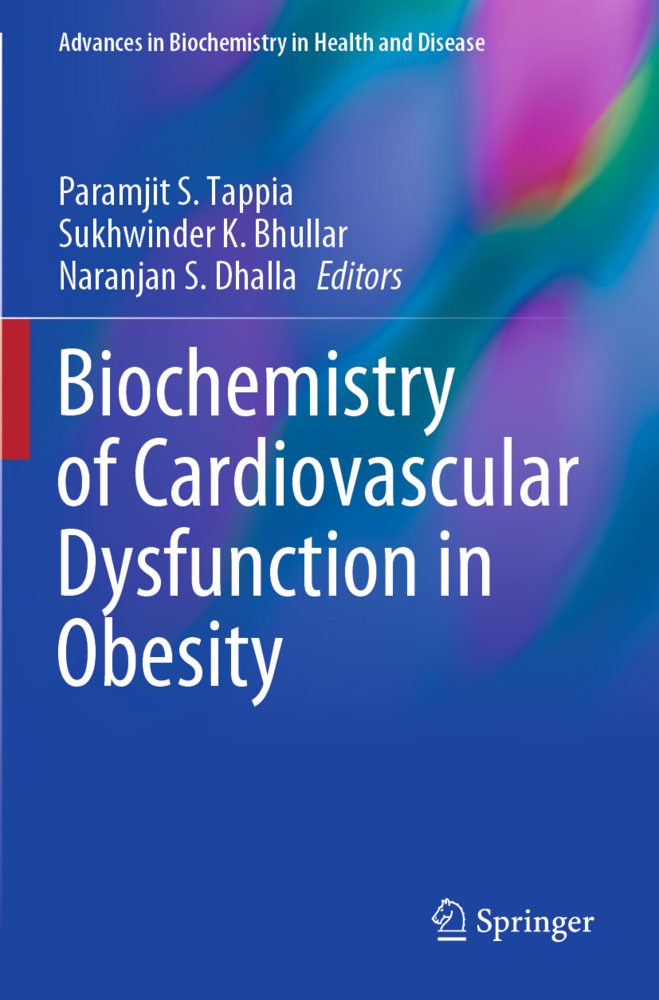
Biochemistry of Cardiovascular Dysfunction in Obesity
In summary, this book covers a broad range of biochemical mechanisms of obesity-induced cardiovascular complications. We hope that the reader will understand that obesity is linked to an increase in the risk and occurrence of fatal CVD. Furthermore, the underlying message presented in the book is that the cause of obesity related disorders is complex and that understanding the biochemistry of cardiovascular dysfunction may contribute to the development of novel interventions for the prevention and treatment of obesity associated comorbidities.
Biochemistry of cardiovascular dysfunction in obesity
Vascular mechanisms linking RAAS components to obesity-associated hypertension
Mechanisms of obesity-induced hypertension in adolescents
Role of the sympathetic nervous system in obesity-induced hypertension
Sex differences in the mechanisms associated with obesity-induced hypertension
Leptin as a mediator of obesity-induced hypertension
Endothelial dysfunction in obesity
Neurohormonal regulation of sympathoexcitation and hypertension in obesity
Role of obesity in hypertension in children
Small for gestational age and obesity associated co-morbidities
Obesity-Related Hypertension in Children
The relationship between obesity and hypertension
Hypertension in Obesity and the Impact of Weight Loss
Parallels in the Evolution of Obesity and Hypertension
Obesity and hypertension
The microcirculation: a key player in obesity-associated cardiovascular disease
Sex Differences in Leptin Control of Cardiovascular Function in Health and Metabolic Diseases
Sex differences in the role of leptin and coronary heart disease
Differential effect of subcutaneous abdominal and visceral adipose tissue on cardiometabolic risk
Sex differences in lipid and lipoprotein metabolism
Sex differences in the mechanisms of obesity-induced hypertension
Impaired cardiac function in obese individuals
Role of Vitamin D deficiency in cardiac function
Obesity in advanced heart failure
Cardiovascular morbidity and mortality associated with obesity
Risk of overweight with the development of heart failure
Obesity and heart failure
Obesity phenotypes and their paradoxical association with cardiovascular diseases
Mechanisms of heart failure with preserved ejection fraction in obesity
Obesity and cardiovascular diseases
Obesity and Heart Failure: Possible mechanisms of the Obesity Paradox
Prognosis of morbid obesity patients with advanced heart failure
BMI as a risk factor for cardiovasculardisease
Relationship between BMI and cardiovascular outcomes in diabetic patients
Cardiometabolic risk in obese children
Gender related differences in obesity associated cardiovascular complications
Understanding the mechanisms and clinical significance of the obesity paradox
Advances in understanding gender difference in cardiometabolic disease risk
Cardiovascular and Metabolic Complications - Diagnosis and Management in Obese Children
Obesity and Ventricular Repolarization.
Anmelden
Tappia, Paramjit S.
Bhullar, Sukhwinder K.
Dhalla, Naranjan S.
| ISBN | 978-3-030-47335-8 |
|---|---|
| Medientyp | Buch |
| Copyrightjahr | 2020 |
| Verlag | Springer, Berlin |
| Umfang | XV, 401 Seiten |
| Abbildungen | XV, 401 p. 55 illus., 48 illus. in color. |
| Sprache | Englisch |