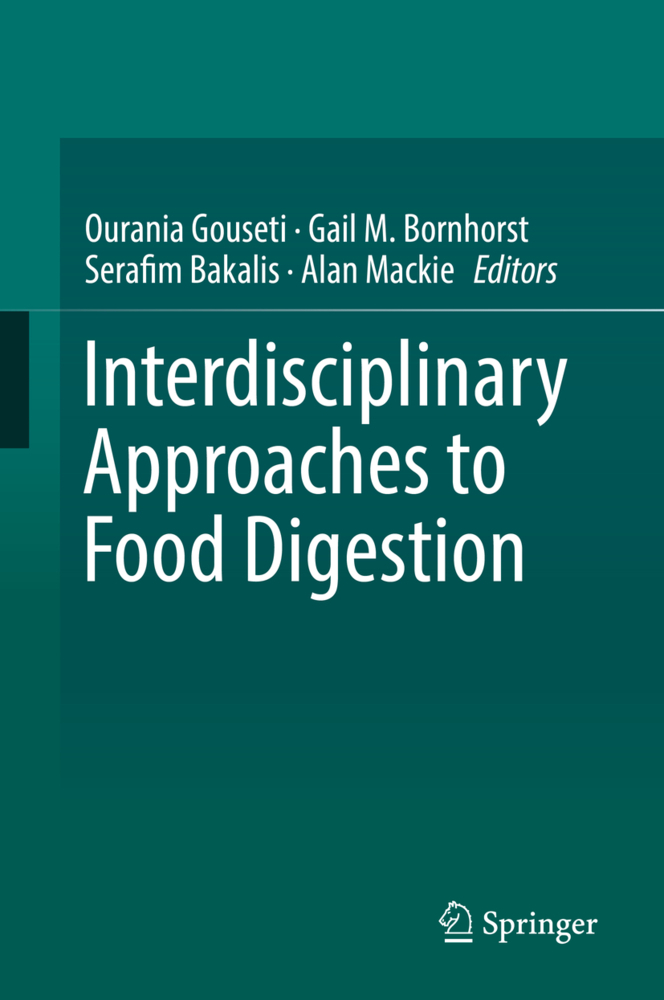
Interdisciplinary Approaches to Food Digestion
For the first time, this singular and comprehensive text presents a focus on quantitative studies aiming to describe food digestion and the tools that are available for quantification. A case study relevant to real-world applications places this theoretical knowledge in context and demonstrates the different ways digestion studies can be used to develop food products. Interdisciplinary Approaches to Food Digestion undertakes a multidisciplinary approach to food digestion studies, placing them in context and presenting relevant phenomena plus the challenges and limitations of different approaches. This book presents a unique, useful reference work to scientists, students, and researchers in the area of food science, engineering, and nutrition.
Over the last two decades there has been an increasing demand for foods that deliver specific nutritional values. In addition, the dramatic increase of food related diseases such as obesity requires the development of novel food products that control satiety and glycemic response. Overall, digestion studies are gaining increasing attention in recent years, especially as the link between diet and health/well-being becomes more evident. However, digestion is a complex process involving a wide range of disciplines such as medicine, nutrition, chemistry, materials science, and engineering. While a significant body of work exists within each discipline, there is a lack of a multidisciplinary approach on the topic which will provide a holistic view of the process. With Interdisciplinary Approaches to Food Digestion, researchers are finally presented with this much needed approach.
Part1. Introduction to Digestion Studies
Chapter1. Short history of digestion studiesChapter2. The digestive tract
Chapter3. In-vivo, in-vitro, in-silico studies: an overview
Part2. Considerations During Digestion Studies
Chapter4. Challenges in quantifying digestion
Chapter5. Exploring and exploiting the role of food structure in digestion
Chapter6. From bite to nutrient: the importance of length scales
Part3. Fundamental Understanding of Digestion Processes
Chapter7. Tools/methods for quantifying digestion: medical imaging aspects
Chapter8. Quantitative characterisation of digestion processes
Chapter9. Consumer psychology and eating behaviour
Chapter10. Tools and methods to quantify digestion: food chemistry and microbiology aspects
Chapter11. Quantifying digestion products: physicochemical aspects
Chapter12. An engineering perspective of human digestion
Part4. Case Study: Starch Digestion, Real-World Relevance
Chapter13. Starchy foods: human nutrition and public health
Chapter14. Kinetics of -amylase action on starch
Chapter15. Influence of physical and structural aspects of food on starch digestion
Chapter16. Conclusions.
Anmelden
Gouseti, Ourania
Bornhorst, Gail M.
Bakalis, Serafim
Mackie, Alan
| ISBN | 978-3-030-03900-4 |
|---|---|
| Medientyp | Buch |
| Copyrightjahr | 2019 |
| Verlag | Springer, Berlin |
| Umfang | X, 358 Seiten |
| Abbildungen | X, 358 p. 102 illus., 42 illus. in color. |
| Sprache | Englisch |