Molecular, Cellular, and Tissue Engineering of the Vascular System
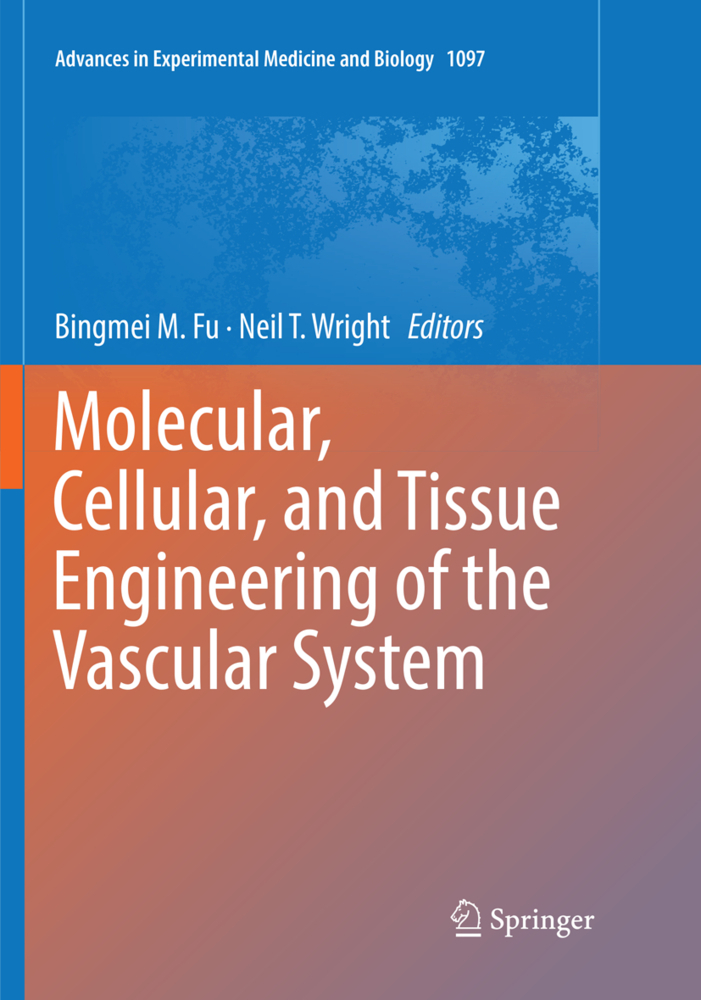
Molecular, Cellular, and Tissue Engineering of the Vascular System
This book introduces the latest research in molecular, cellular, and tissue engineering of the vascular system. Topics covered include the roles of endothelial surface glycocalyx as a mechano-sensor and transducer for blood flow, a barrier to water and solute transport across the vascular wall and to the interaction between circulating cells and the vessel wall, the roles of nuclear envelope proteins and nuclear lamina in regulating vascular functions under blood flow-induced forces, and the roles of smooth muscle cells and extracellular components in arterial vasoconstriction. Other topics covered include non-surgical vascular interventions for coronary artery diseases, genesis and mechanisms of atherosclerotic plaque microcalcifications and human abdominal aortic aneurysms, experiments and modelling for red blood cell and tumor cell movement in microcirculation, transport across the blood-brain barrier and its role in Alzheimer's disease, mathematical models for cell survival after hyperthermia, application of hypothermia in enhancing treatment for brain and spinal cord injuries, and damage of eardrums due to blast waves. This is an ideal book for biomedical engineers and researchers, medical researchers, and students in biomedical engineering and medical sciences.
Chapter 1: The Role of Endothelial Surface Glycocalyx in Mechanosensing and Transduction
Chapter 2: The Molecular Structure Of The Endothelial Gycocalyx Layer (EGL) and Surface Layers (ESL) Modulation of Transvascular ExchangeChapter 3: Role of the Glycocalyx as a Barrier to Leukocyte-Endothelium Adhesion
Chapter 4: Mechanobiology and Vascular Remodeling: from Membrane to Nucleus
Chapter 5: Endothelial nuclear lamina in mechanotransduction under shear stress
Chapter 6: Regional heterogeneity in the regulation of vasoconstriction in arteries and its role in vascular mechanics
Chapter 7: Microcalcifications, their genesis, growth and biomechanical stability in fibrous cap rupture
Chapter 8: Abdominal Aortic Aneurysm Pathomechanics: Current Understanding and Future Directions
Chapter 9: Vascular intervention: from angioplasty to bioresorbable vascular scaffold
Chapter 10: On the physics underlying longitudinal capillary recruitment
Chapter 11: Tumor Metastasis in theMicrocirculation
Chapter 12: Modelling Cell Adhesion and Extravasation in Microvascular system
Chapter 13: Transport across the Blood-Brain Barrier
Chapter 14: Blood-Brain Barrier Integrity and Clearance of Amyloid-beta from the BBB
Chapter 15: Mathematical Models of Cell Response Following Heating
Chapter 16: Hypothermia Used in Medical Applications for Brain and Spinal Cord Injury Patients
Chapter 17: Biomechanical Changes of Tympanic Membrane to Blast Waves.
Anmelden
| ISBN | 978-3-030-07193-6 |
|---|---|
| Medientyp | Buch |
| Copyrightjahr | 2018 |
| Verlag | Springer, Berlin |
| Umfang | VIII, 334 Seiten |
| Abbildungen | VIII, 334 p. 84 illus., 65 illus. in color. |
| Sprache | Englisch |